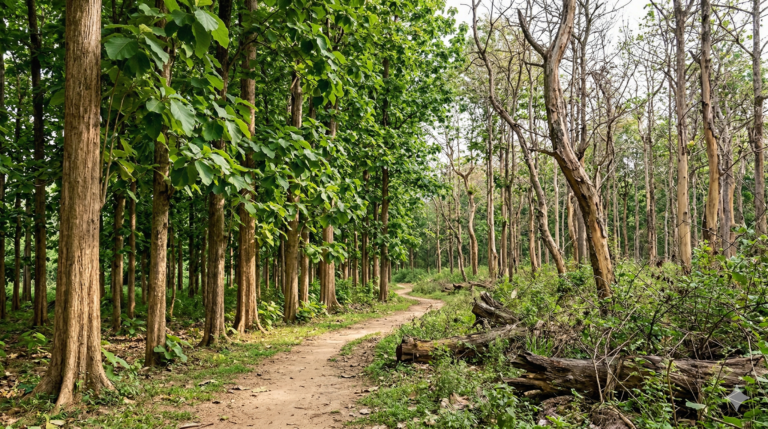
Why thousands of Dutch people invested in teak plantations — and why it structurally went wrong.
The appeal
Teak is one of the most valuable tropical hardwood species in the world, sought after for furniture, shipbuilding, and construction because of its hardness, durability, and beautiful grain. A teak tree has a growth period of 20 to 25 years, after which the wood can be harvested and sold at premium prices. These characteristics made teak a seemingly ideal investment: invest now in a tangible, valuable product, wait patiently, and harvest a handsome return later.
How it was offered in the Netherlands
Starting in the 1990s, Dutch investors were approached en masse to buy hectares of teak on plantations in Brazil. Companies like Goodwood Investments sold plots via telephone acquisition, supported by professionally designed brochures that projected returns of hundreds of percent over the term. The investor bought a plot of land with trees and was to receive the proceeds after the growth period and harvest. The sales were highly successful: approximately 14,000 Dutch people collectively invested more than €300 million. The product seemed solid — there were actual trees on actual plantations — and early investors sometimes even received interim payouts, which bolstered confidence.
Why it went wrong
The reality turned out to be fundamentally different from what the sales brochures portrayed. The promised returns were unrealistically high from the very beginning. Harvesting proceeds were much lower than predicted or completely failed to materialize. The costs for maintenance, harvesting, and transport turned out to be many times higher than what was presented to investors. The investor had absolutely no control over what happened on the plantation on the other side of the world. The AFM had no jurisdiction over the foreign exploitation. And the financial flows were deliberately made complex via multiple entities in multiple countries.
The lesson for investors
Teak investments perfectly illustrate why foreign investments with promises of high returns are so risky. If you cannot control the investment, if supervision is lacking, and if the promises seem too good to be true — then be extremely careful.